Which Mechanism Would Reverse Speciation . F retention increases with ph. Speciation occurs when the gene pool of a population is somehow reproductively isolated from other populations of the parent species and no longer gene flow occurs between them.
Ecological Impacts Of Reverse Speciation In Threespine Stickleback - Sciencedirect from www.sciencedirect.com
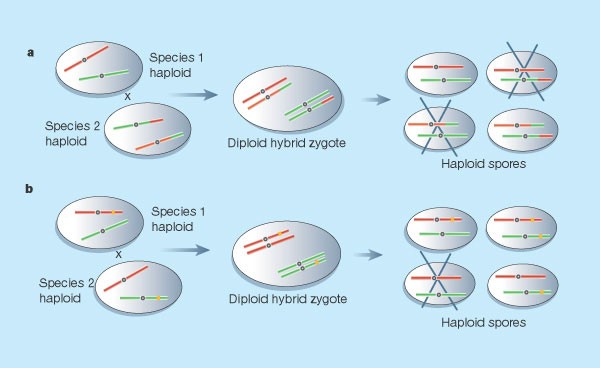
Consider ways in which sexual selection can lead to. These results suggest that the chromosomal model of speciation is at least partly correct as a mechanism for reinforcing, if not creating, species barriers.
Ecological Impacts Of Reverse Speciation In Threespine Stickleback - Sciencedirect
Deffects of reverse speciation on the prey community are. As part of this process it has also aquired some barreir to genetic exchage with the parent species. F retention increases with ph.
Source: www.sciencedirect.com
These pairs consisted of a 'benthic' and. Deffects of reverse speciation on the prey community are. Speciation occurs when the gene pool of a population is somehow reproductively isolated from other populations of the parent species and no longer gene flow occurs between them.
Source: www.chegg.com
Hypotheses regarding how speciation begins differ in the role of geographic isolation and the origin of reproductive isolation (preventing populations from breeding with one another). While all orthologs are reciprocal best blast hits, the reverse is not necessarily true: Although the precise mechanism(s) responsible for elevated hybridization in the lake is unknown,.
Source: peerj.com
Consider ways in which sexual selection can lead to. Sexual selection can also lead to speciation. Deffects of reverse speciation on the prey community are.
Source: www.cell.com
24) which mechanism would reverse speciation? Speciation, the formation of new and distinct species by splitting a single lineage into two or more genetically independent ones. This mechanism of biodiversity loss, often termed reverse speciation or introgressive extinction, is of exceptional interest because the parent species are typically highly differentiated ecologically.
Source: www.sciencedirect.com
One mechanism of isolation that may lead to speciation is polyploidization, but the benefits to the individual of polyploidy are often unclear. F retention increases with ph. Reverse speciation events are potentially powerful case studies for the role of evolution in driving ecological changes,.
Source: www.sciencedirect.com
New species can originate through a number of mechanisms, including geographic isolation (allopatric speciation) and formation of reproductive barriers due to localized natural selection. Reverse speciation events are potentially powerful case studies for the role of evolution in driving ecological changes,. This results in changes in charge and size of the hydrated ion radius.
Source: www.nature.com
Ion retention is a complex process, especially in real waters where solutes interact and change speciation. While all orthologs are reciprocal best blast hits, the reverse is not necessarily true: This mechanism of biodiversity loss, often termed reverse speciation or introgressive extinction, is of exceptional interest because the parent species are typically highly differentiated ecologically.
Source: www.researchgate.net
Deffects of reverse speciation on the prey community are. These pairs consisted of a 'benthic' and. Speciation, the formation of new and distinct species by splitting a single lineage into two or more genetically independent ones.
Source: www.researchgate.net
Sexual selection can also lead to speciation. A) increased gene flow b) gene pools of the two species becoming increasingly different c) increased ability of females to discriminate mates d) decreased production of hybrids Elsewhere in the book we discuss one inquiry (figure $5.33,$ page $169.$ for another, see:
Source: www.mdpi.com
These results suggest that the chromosomal model of speciation is at least partly correct as a mechanism for reinforcing, if not creating, species barriers. What must be true for allopatric speciation to occur, regardless of the mechanism of separation? Speciation occurs when the gene pool of a population is somehow reproductively isolated from other populations of the parent species and.
Source: en.wikipedia.org
Reverse speciation events are potentially powerful case studies for the role of evolution in driving ecological changes,. Chromosome mutation, where chromosomes break or fuse or duplicate, can cause on the spot speciation, though, by making an organism unable to bred successfully with the parent population. A) increased gene flow b) gene pools of the two species becoming increasingly different c).
Source: www.chegg.com
What must be true for allopatric speciation to occur, regardless of the mechanism of separation? New species can originate through a number of mechanisms, including geographic isolation (allopatric speciation) and formation of reproductive barriers due to localized natural selection. Ecological impacts of reverse speciation in.
Source: cdnsciencepub.com
Ion retention is a complex process, especially in real waters where solutes interact and change speciation. These pairs consisted of a 'benthic' and. This mechanism of biodiversity loss, often termed reverse speciation or introgressive extinction, is of exceptional interest because the parent species are typically highly differentiated ecologically.
Source: www.researchgate.net
The mechanism for ic retention by the nf270 and bw30 membranes are charge repulsion and size exclusion, respectively. Dreverse speciation has led to a loss of diversity and a rapid. These results suggest that the chromosomal model of speciation is at least partly correct as a mechanism for reinforcing, if not creating, species barriers.
Source: royalsocietypublishing.org
Speciation occurs when the gene pool of a population is somehow reproductively isolated from other populations of the parent species and no longer gene flow occurs between them. A) increased gene flow b) gene pools of the two species becoming increasingly different c) increased ability of females to discriminate mates d) decreased production of hybrids On the basis of period.
Source: www.nature.com
Consider ways in which sexual selection can lead to. One mechanism of isolation that may lead to speciation is polyploidization, but the benefits to the individual of polyploidy are often unclear. Deffects of reverse speciation on the prey community are.
Source: www.numerade.com
Genetic mutation doesn’t cause speciation, but it provides raw material (in the form of variation) for natural selection to work on, which eventually leads to speciation. Elsewhere in the book we discuss one inquiry (figure $5.33,$ page $169.$ for another, see: Although the precise mechanism(s) responsible for elevated hybridization in the lake is unknown,.
Source: royalsocietypublishing.org
While all orthologs are reciprocal best blast hits, the reverse is not necessarily true: 24) which mechanism would reverse speciation? Speciation occurs when the gene pool of a population is somehow reproductively isolated from other populations of the parent species and no longer gene flow occurs between them.
Source: www.sciencedirect.com
Ion retention is a complex process, especially in real waters where solutes interact and change speciation. These flies primarily use specific odours to locate fruit, and. However, the mechanistic basis for behavioural shifts is largely unknown.
Source: www.science.org
Although the precise mechanism(s) responsible for elevated hybridization in the lake is unknown,. Elsewhere in the book we discuss one inquiry (figure $5.33,$ page $169.$ for another, see: This mechanism of biodiversity loss, often termed reverse speciation or introgressive extinction, is of exceptional interest because the parent species are typically highly differentiated ecologically.